
Storm damage roof repair is one of the most common calls we get once a storm has passed — a damaged roof left too long only gets worse. What you do in the first few hours affects both your safety and whether your insurance claim goes through cleanly.
What actually causes storm damage to a roof?
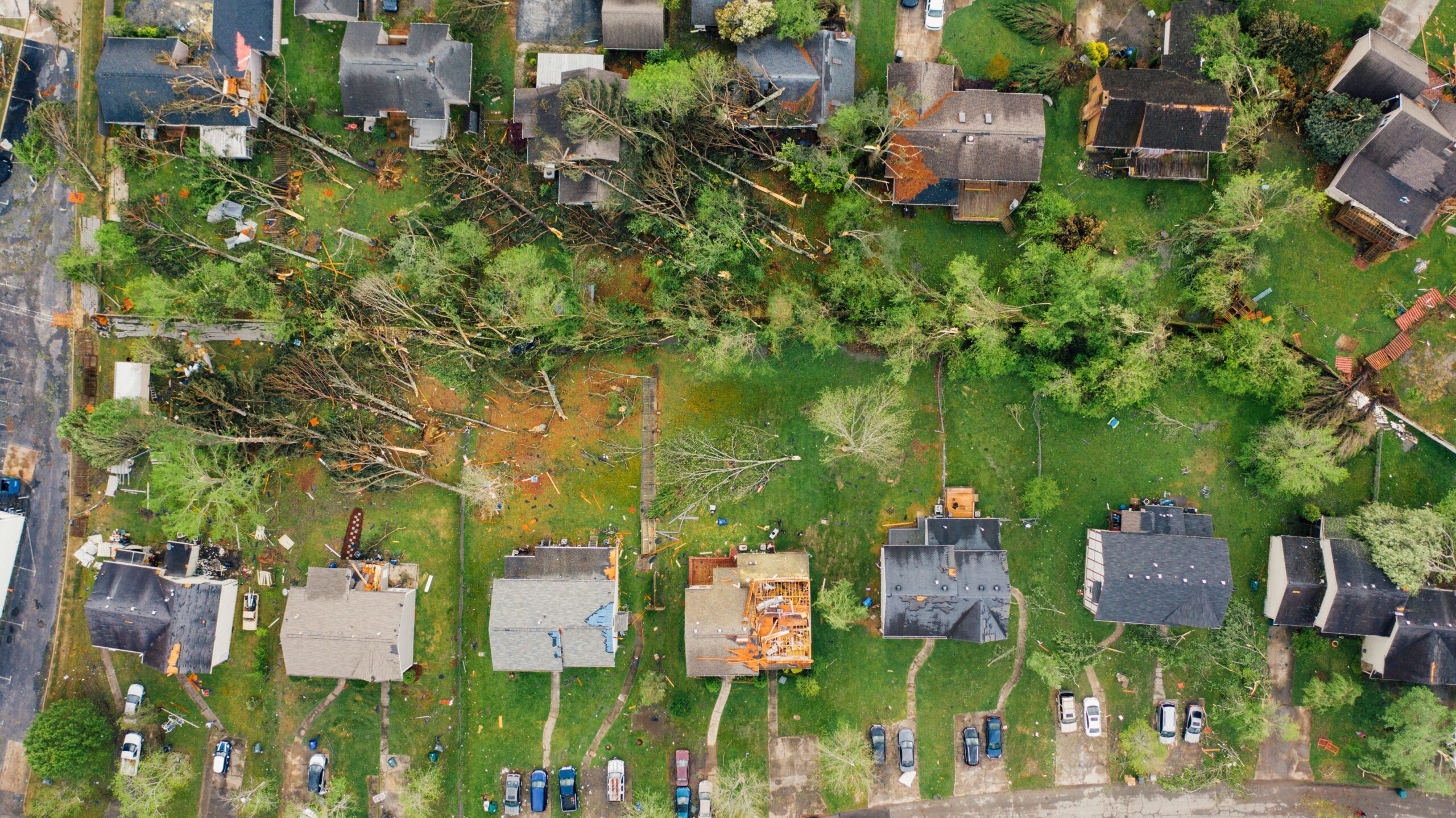
It's rarely a single dramatic event. Wind blowing across a roof creates suction — negative pressure — rather than simply pushing down on it. That suction is strongest at the edges, ridges and corners, which is why loose tiles usually start coming away there first rather than in the middle of a slope. Once wind gets underneath even one lifted tile, it can peel back the ones next to it in quick succession.
Driving rain adds a second mechanism: water forced sideways under tiles or through gaps that would normally shed rain running straight down. And flying debris — branches, fence panels, even tiles from a neighbouring roof — causes direct impact damage that can crack tiles or puncture flat roof membranes outright.
Is it safe to go outside and check the damage?
Yes, but only once the wind has genuinely dropped — not just eased. Loose tiles, slipped ridge tiles and damaged flashing can come down without warning even after a storm has technically passed. Check for downed power lines or gas smells before you approach the house at all — if you find either, stay back and call the relevant utility, not us.
Once it's safe, inspect from the ground. Walk the perimeter and look up — don't get on a ladder, and don't climb onto the roof. Falls from height are the leading cause of workplace deaths in Great Britain, and roof work alone accounts for around a quarter of fatal falls in construction. If we wouldn't send an untrained person up there, you shouldn't go up there either.
How urgent is the damage you're looking at?
Not everything needs an emergency response. Use this as a rough guide to how quickly to act:
| What you're seeing | Urgency | What to do |
|---|---|---|
| Active leak / water inside the house | Immediate | Catch water, move belongings, arrange emergency temporary repair the same day |
| Missing or slipped tiles, visible gaps | Same week | Photograph from the ground, book an inspection before the next spell of rain |
| Damaged flashing around chimney or valleys | Same week | Often not visible from the ground — book an inspection even if nothing looks obviously wrong |
| Debris or fallen branches on the roof, no visible penetration | Within days | Don't remove it yourself — a professional can check for damage underneath while clearing it |
| Damaged guttering, downpipes pulled away | Within days | Note it for your claim; less likely to cause fast-escalating damage than a compromised roof covering |
Does it matter if you have a pitched or flat roof?
Yes — they fail differently in a storm, which changes what you should look for. On a pitched roof, the classic signs are missing, slipped or cracked tiles, displaced ridge tiles, and damaged flashing around chimneys or valleys. Steeper pitches are actually more exposed to wind uplift than shallow ones, which is a common misconception.
On a flat roof, storm damage often shows as bubbling or lifted sections in the membrane, water pooling that wasn't there before, or debris impact punctures — none of which are as visually obvious from the ground as a missing tile. If you have a flat-roofed extension or garage as well as a pitched main roof, check both separately; a storm can affect one and not the other.
What should you photograph for an insurance claim?
Photograph the roof from the ground, the garden, and the inside of the house — before any temporary repairs, where possible. Insurers verify that a genuine storm caused the damage, not general wear and tear, so documentation carries real weight. Take:
- Wide shots of the whole roof from each side of the property, taken from the ground
- Close-ups (zoomed in, not climbed up to) of any missing tiles, damaged flashing or debris
- Photos of anything that's landed in the garden — tiles, branches, fence panels
- Interior shots of any water staining, damp patches or active drips
- The date and rough time you first noticed the damage
Do this before any temporary repairs where possible. If water is actively coming in, protecting the house takes priority over the perfect photo — just capture what you can first.
Does home insurance cover storm damage roof repair?
Most UK buildings insurance covers storm damage roof repair costs, provided the roof was in reasonable condition beforehand. The catch is the definition of "storm." The Association of British Insurers sets the industry standard: wind gusts of at least 55mph (Force 10 Beaufort), rainfall of 25mm an hour or more, snow of at least 30cm in 24 hours, or hail severe enough to damage hard surfaces. If wind in your area didn't reach that threshold, some insurers will decline the claim even if a tile genuinely blew off.
What happens when the insurer's loss adjuster visits?
For anything beyond a very small claim, your insurer will usually arrange for a loss adjuster to inspect the damage on their behalf. It's worth remembering that — on their behalf, not yours. Their job is to confirm the cause and extent of damage against your policy terms, not to advocate for the largest possible payout.
You're entitled to be present during the visit, and it's worth being there if you can. Have your own photos, the date the damage occurred, and — if you've already had a professional roofer look at it — their assessment ready to compare against the adjuster's findings. If a repair estimate from your own roofer differs significantly from the insurer's figure, you can query it; you're not obliged to simply accept the first number offered.
Should you get a temporary repair before the insurer sends someone out?
Yes, if water is getting in. Insurers expect reasonable steps to stop the situation worsening — usually called your "duty to mitigate." A tarpaulin over an exposed section, fitted by a professional, is the standard temporary fix while the permanent repair is assessed and approved.
We wouldn't recommend a full permanent repair before your insurer or their loss adjuster has seen the damage, unless the property is genuinely unsafe to leave as it is. It's worth a quick call to your insurer first to check whether they need to inspect before work starts.
What if you're a landlord or run a business from the property?
If the damaged roof is on a rented home, responsibility for repairs usually sits with you, not your tenant. Under Section 11 of the Landlord and Tenant Act 1985, landlords have a statutory duty to keep the structure and exterior of the property — including the roof — in repair, and that duty is triggered once you've been notified of the problem. It can't be passed to the tenant through the tenancy agreement.
For commercial and let properties, the priority is usually a fast temporary repair to stop the damage escalating and disrupting tenants or business operations, followed by a proper diagnosis once it's safe to do so. If you manage more than one property, it's worth having a roofer's number ready before storm season rather than searching for one mid-emergency.
How can you reduce the risk before the next storm?
You can't storm-proof a roof completely, but regular maintenance closes off most of the easy entry points wind and rain exploit. Loose or already-lifting tiles, worn flashing and blocked gutters are all things a routine inspection catches before a storm turns them into an emergency call.
If your roof is getting on in years, it's worth knowing roughly what a full replacement would involve before you need one under pressure — see our guide on how long a roof replacement takes. And if you're not sure whether current wear is heading towards a problem, our guide to the signs your roof needs repairing is worth a read before the next named storm arrives.
Storm damage roof FAQs
How do I know if the damage was actually caused by a storm and not general wear?
Insurers check weather data for your postcode against the time you noticed the damage, and compare wind speeds against their storm threshold (typically 55mph gusts). A pre-existing weak spot — old flashing, already-loose tiles — can make a claim harder even if a storm was the trigger, which is why regular maintenance matters for claims as well as prevention.
Can I claim if the wind didn't quite reach 55mph?
It depends on your specific policy wording, and possibly on other factors like rainfall or hail during the same event. Some insurers apply the ABI guidance strictly; others use their own definition. Check your policy documents, and if a claim is refused unfairly, you can escalate to the Financial Ombudsman Service.
Is it safe to clear debris off the roof myself?
No — leave this to a professional. Wet or storm-damaged roof surfaces are unpredictable, and what looks like simple debris removal can disturb already-loosened tiles or flashing. Falls from height remain the leading cause of workplace fatalities in the UK, and that risk doesn't disappear just because it's your own home.
How quickly can AJW Roofing get to an emergency after a storm?
We prioritise active leaks and safety hazards as emergency call-outs. Get in touch and we'll confirm availability for your property straight away.
Will a temporary tarpaulin repair damage my roof further?
Not when it's fitted correctly by someone experienced with the roof type — tarpaulins are a standard, insurer-recognised way to stop water ingress while a permanent repair is arranged. The risk comes from DIY attempts, which can leave gaps or cause additional damage trying to secure it.
Whose responsibility is storm damage to a roof on a rented property?
Under Section 11 of the Landlord and Tenant Act 1985, the landlord is responsible for keeping the structure and exterior — including the roof — in repair, once notified of the damage. This can't be shifted onto the tenant through the tenancy agreement.
Do I have to use the contractor my insurer recommends?
Not usually. Insurers often suggest a preferred or approved contractor because it's convenient for them, but in most cases you're entitled to use your own roofer instead. Check your specific policy wording — a small number of policies do include a clause requiring an approved contractor — but the default position is that the choice is yours.
Will making a storm damage claim increase my insurance premium?
A legitimate claim for sudden storm damage — as opposed to a claim linked to poor maintenance — typically has a smaller impact on premiums than people expect, and a first claim in particular is unlikely to cause a significant rise. Every insurer weighs this differently, so it's worth asking yours directly if you're unsure.
Does my buildings insurance also cover damaged belongings inside the house?
Not on its own. Buildings insurance covers the structure — the roof, walls and fixed fittings. Damaged carpets, furniture or electronics from a leak need contents insurance, which is often a separate policy or a combined buildings-and-contents package. Check which you hold before assuming everything is covered.
What if a neighbour's tree or fence caused the damage to my roof?
You'd typically claim on your own buildings insurance first, even if a neighbour's tree came down onto your roof. Your insurer may then seek to recover their costs from your neighbour's insurer if negligence — such as a tree that was known to be unsafe — can be shown, but that process happens between the insurers, not something you need to chase yourself.