
The common mistake is treating every chimney problem as a cleaning problem. Before winter, homeowners quite reasonably think, “I’ll get the chimney swept and that will sort it.” Sometimes it will. But a clean flue can still sit inside a chimney stack with failed mortar, cracked brickwork or leaking leadwork — and those are roofing defects, not sweeping defects.
What Does a Chimney Sweep Actually Fix?
A professional chimney sweep deals primarily with the flue and combustion route. The aim is to keep the passage clear so smoke and combustion gases can travel safely from the appliance to the outside.
The National Association of Chimney Sweeps (NACS) says regular sweeping removes soot, creosote, bird nests, cobwebs and other blockages. That matters because deposits can restrict the flue and creosote can contribute to chimney fires.
Government guidance also advises that chimneys and flues should be kept clean and not blocked. For homes using fossil-fuel or solid-fuel appliances, the condition of the appliance, ventilation and flue all form part of the safety picture.
What Does a Chimney Repair Deal With?
Chimney repair is building work. It addresses defects in the external stack and, depending on the problem, may also involve the flue or liner.
Typical roofing-side chimney repairs include:
- Repointing eroded mortar joints where weather has washed or cracked the joints between bricks or stone.
- Replacing damaged bricks where faces have spalled, cracked or become loose.
- Repairing or replacing lead flashing where the chimney meets the roof and water is getting in.
- Replacing or securing chimney pots where pots are cracked, unstable or damaged.
- Repairing the chimney stack where movement, deterioration or previous poor repairs have affected its condition.
AJW Roofing’s chimney repair service covers repointing, eroded brickwork, chimney-pot replacement and leadwork — the kind of defects that a sweep is not there to rebuild.
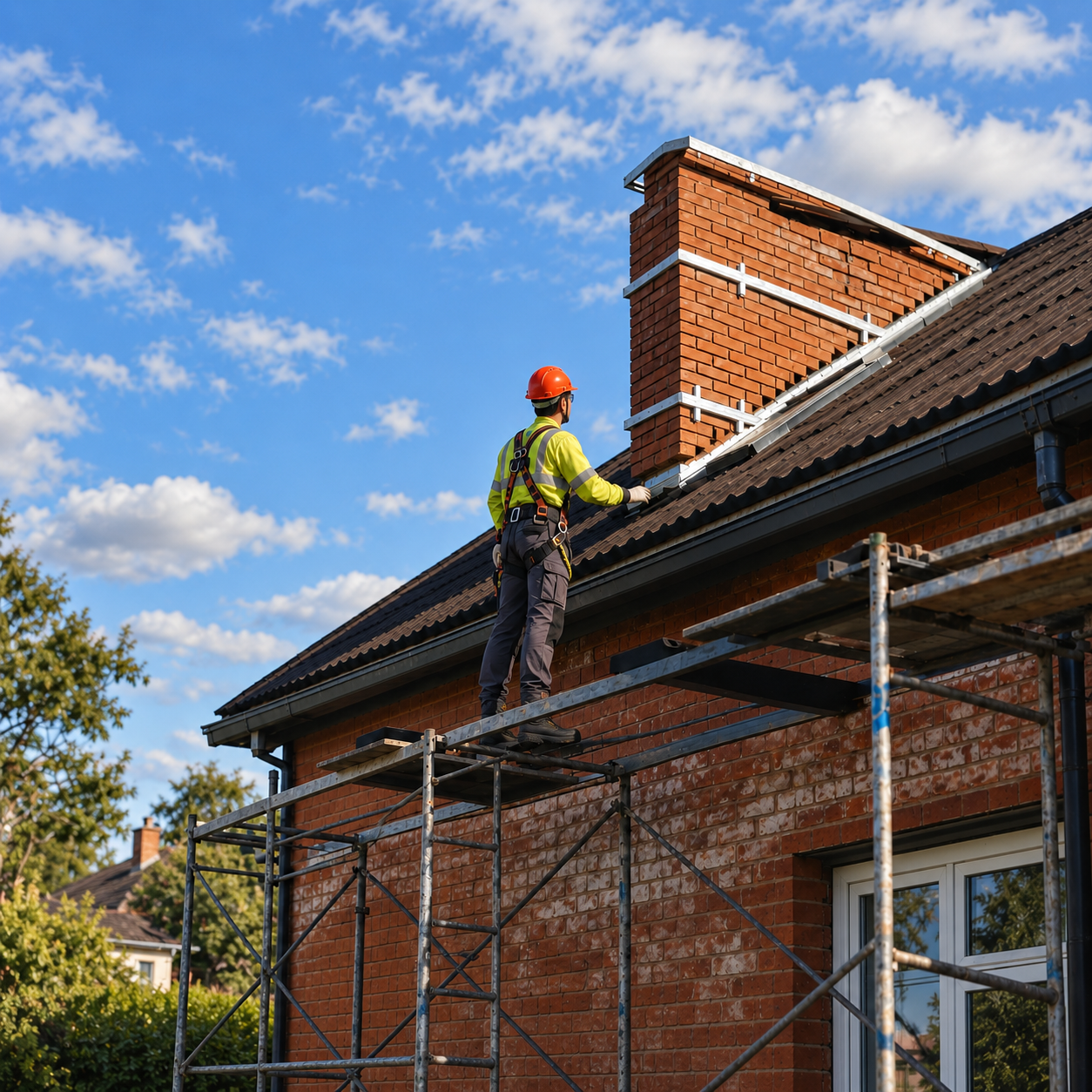
Chimney Sweep vs Chimney Repair: Which One Do You Need?
| What You Notice | Likely First Call | Why |
|---|---|---|
| Soot falling into the fireplace | Chimney sweep | The flue may contain loose soot or deposits that need cleaning and inspection. |
| Bird nest or suspected blockage | Chimney sweep | A sweep can clear appropriate obstructions and check whether the flue is passable. |
| Cracked or missing mortar joints | Chimney repair | The masonry needs repointing or local rebuilding; cleaning does not restore failed joints. |
| Loose, cracked or leaning chimney pot | Chimney repair | The pot or surrounding masonry needs to be made safe and repaired. |
| Damp patch near chimney breast after rain | Roof/chimney inspection | Water can enter through defective flashing, masonry, mortar joints or other roof details. |
| Smoke or fumes entering a room | Stop using the appliance and get the system checked | A blockage, flue defect, ventilation issue or appliance problem can all be involved. |
| Visible cracks or movement in the stack | Chimney repair | This can indicate a masonry or stability issue and should be professionally assessed. |
| Flue has not been cleaned for a long time | Chimney sweep | Regular sweeping removes deposits and gives an opportunity to identify possible flue concerns. |
This table is a practical guide, not a remote diagnosis. Chimney problems can overlap: a sweep may identify a defect that needs a roofer, and a roofer may recommend a sweep or flue specialist before the appliance is used again.
The Winter Mistake: Cleaning the Flue but Ignoring the Stack
Before winter, the inside of the chimney gets most of the attention because homeowners are preparing to use a fireplace or stove again. The external stack often gets ignored until there is a leak.
That matters in West Sussex because exposed chimney stacks sit above the roofline and take the full force of rain, wind and repeated wet-and-dry cycles. Mortar joints can erode, brick faces can deteriorate and the junction between the chimney and roof can begin to let water through.
A sweep cannot repoint mortar or renew defective lead flashing. Equally, a roofer repointing the stack is not a substitute for cleaning a flue that is carrying soot and combustion deposits. On many older properties, both services can be necessary — they simply solve different problems.
What Are the Signs Your Chimney Needs Repair Rather Than Sweeping?
From ground level, look for visible changes rather than trying to inspect the roof yourself. Warning signs include:
- Mortar joints that look recessed, cracked or missing between bricks or stones.
- Cracked, flaking or spalled brickwork on the chimney stack.
- A chimney pot that appears cracked, loose or out of line.
- Lead flashing around the base of the chimney that looks lifted, split or poorly patched.
- Damp staining inside around the chimney breast or ceiling after rainfall.
- Pieces of mortar or masonry appearing on the roof, in gutters or on the ground below.
- A stack that appears to lean, move or have open cracks.
Can a Damaged Chimney Cause Damp Even If the Flue Is Clean?
Yes. A clean flue does not make the external chimney stack watertight.
Rain can enter around defective lead flashing, through badly eroded mortar joints, damaged masonry or failed details around the top of the stack. Once water gets into the chimney structure, it can show as staining internally or contribute to further deterioration of masonry and finishes.
This is why “we had it swept last year” does not rule out a roofing problem. Sweeping and weatherproofing are different maintenance jobs.
Does Repointing Mean Rebuilding the Whole Chimney?
No. Repointing means removing failed mortar from joints and replacing it with suitable new mortar. It is not the same as rebuilding the entire stack.
Historic England advises against unnecessary wholesale repointing of older masonry. Sound historic mortar should be retained where possible, and repair materials need to be compatible with the existing fabric. That is particularly relevant to older West Sussex houses built with traditional brick, stone and lime-based mortars.
If the bricks themselves are badly damaged, the stack is unstable or previous repairs have trapped moisture, the job may need more than simple repointing. That is why the condition of the masonry should determine the scope, rather than automatically repointing every joint.
What About the Chimney Liner?
The liner is another area where the “sweep or repair” distinction becomes important. Sweeping can clear a liner, but it cannot make a damaged liner sound.
HETAS guidance says an older chimney should be checked for condition, swept clear of obstructions and assessed for defects before being relied on. Where a flue is leaking or unsuitable, relining may be one of the remedial options. The right solution depends on the appliance, fuel, existing chimney and condition of the flue.
If there is any concern about leakage of combustion gases, stop using the appliance until the flue and appliance have been checked by an appropriately competent professional.
How Often Should a Chimney Be Swept in the UK?
There is no single frequency that suits every chimney. It depends on the appliance, fuel, how often it is used, moisture content of wood and the chimney itself.
NACS currently gives the following general guidance:
- Wood: quarterly when in use.
- Smokeless fuel: at least once a year.
- Oil: once a year.
- Gas: once a year where the chimney is designed to be swept.
UK government carbon monoxide guidance also says chimneys and flues should be kept clean by sweeping from top to bottom at least annually and should not be blocked. Your sweep should advise the appropriate frequency for your actual installation.
What Should West Sussex Homeowners Check Before Winter?
A useful pre-winter chimney check separates the system into two parts: the flue that carries combustion gases and the external stack that keeps the weather out and remains structurally sound.
Inside the system
- Arrange sweeping at the frequency appropriate to your fuel and appliance.
- Do not use an appliance if you suspect the flue is blocked or leaking.
- Make sure fuel-burning appliances are serviced by the appropriate qualified engineer.
- Use an audible carbon monoxide alarm that meets the applicable British or European standard.
Outside the system
- Look from ground level for cracked or missing mortar.
- Check for visibly damaged chimney pots or cowls.
- Watch for damp around the chimney breast after heavy rain.
- Have questionable lead flashing, brickwork or movement inspected before winter weather worsens the defect.
For more homeowner guidance, browse AJW Roofing’s Roofing Tips & Guides.
Who Should You Call First?
If your main concern is the flue — soot, deposits, nesting material or routine cleaning — start with a qualified chimney sweep.
If you can see deterioration to the stack, mortar, pots or leadwork, or you have rainwater getting in around the chimney, start with a roofer experienced in chimney repairs.
If you have both a flue concern and visible masonry deterioration, you may need both trades. That is not duplication: one is dealing with the combustion route, the other with the fabric and weatherproofing of the chimney.
Chimney Sweep or Chimney Repair FAQs
Can a chimney sweep repair damaged brickwork?
Not as part of normal sweeping. A chimney sweep cleans and inspects the flue. Cracked bricks, failed pointing, damaged pots and defective lead flashing are building or roofing repairs and need the appropriate trade.
Should I have my chimney swept before winter?
If the chimney serves a working appliance, it should be swept at the frequency appropriate to the fuel, appliance and usage. NACS advises that wood-burning chimneys may need sweeping quarterly when in use, while several other fuel types are generally advised at least annually.
Can bad chimney pointing cause a leak?
Deteriorated mortar joints can allow more water into the chimney masonry. Leaks around chimneys can also come from defective lead flashing, damaged masonry, chimney-top details or nearby roofing, so the whole area should be inspected rather than assuming one cause.
Does a clean chimney mean the chimney is safe?
No. Sweeping removes deposits and blockages, but the flue, liner, chimney stack, pots, masonry and roof junction also need to be in suitable condition. A clean flue does not repair structural or weatherproofing defects.
What should I do if smoke or fumes come back into the room?
Stop using the appliance and have it, the flue and the ventilation arrangements checked by an appropriately competent professional. If a carbon monoxide alarm sounds or you suspect carbon monoxide exposure, leave the property and follow emergency guidance.
Do old chimneys need different mortar when they are repointed?
They can. Historic England advises that repair materials should be compatible with the existing masonry. Older brick and stone buildings may use traditional lime-based mortars, so the existing construction should be assessed before specifying a repair.